Introduction
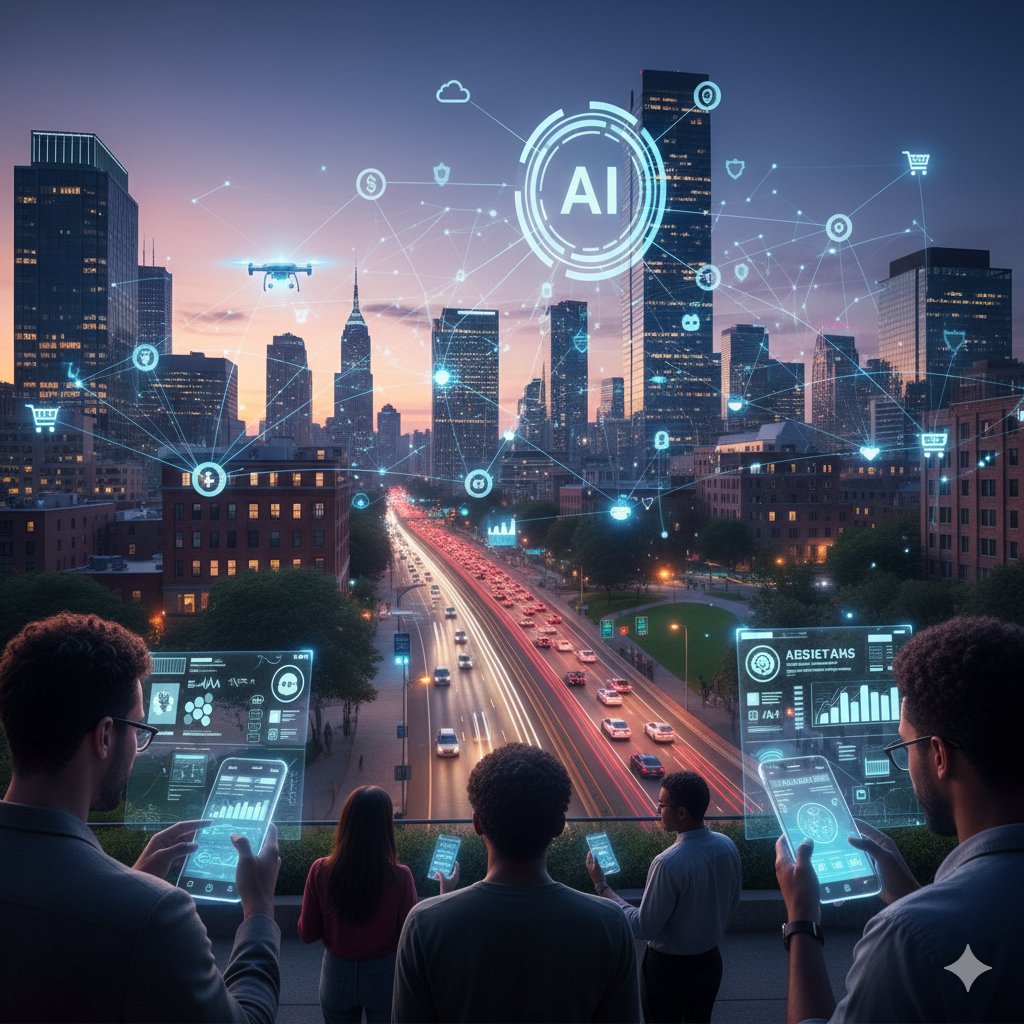
Artificial Intelligence (AI) has slipped into our reality not with a massive public announcement, but through countless subtle improvements and invisible optimizers. It is no longer a technology of the future; it is the infrastructure of the present. The profound reality is that AI is already changing your daily life in ways that often fly completely under the radar.
From the moment your personalized alarm clock wakes you up, to the secure payment you make before bed, AI is the silent partner guiding and enhancing your decisions, communications, health, and security. It has fundamentally reshaped how information is shared, how goods are bought, and even how science discovers new treatments.
This extensive guide is designed to pull back the curtain and illuminate the astonishing truth: 101 ways AI is already changing your daily life. We will explore these transformations across ten crucial domains, providing concrete examples, easy-to-understand explanations, and essential resources. Our goal is to make the invisible visible, helping you understand the immense power of this technology that is constantly at work.
Table of Contents
Part 1: Your Digital Experience & Communication (1-20) 💬📱
The platforms we use daily for communication, search, and social connection are powered almost entirely by AI algorithms.
- Smart Inbox Filtering: AI tirelessly defends your email, sorting spam, categorizing promotional messages, and flagging urgent emails, ensuring you see what matters.
- Predictive Text and Autocorrect: Your phone anticipates your next word or corrects a typo instantly using recurrent neural networks (RNNs) that analyze language patterns.
- Voice Assistant Commands: Whether you ask Siri, Alexa, or Google Assistant to play music or set a timer, AI translates your messy speech into actionable commands.
- Real-Time Translation: Communication apps use neural machine translation (NMT) to allow you to converse instantly with someone speaking a different language.
- Personalized News Feeds: Facebook, Twitter, and LinkedIn use AI to select posts, articles, and updates most likely to keep you engaged, a core way AI is already changing your daily life.
- Search Engine Ranking: Google’s sophisticated AI algorithms (like RankBrain) determine the order of search results, ensuring you find the most relevant information quickly.
- Smart Reply Suggestions: Gmail and similar apps offer short, contextually appropriate response options for quick communication efficiency.
- Automated Subtitles and Transcriptions: AI generates accurate captions for videos on platforms like YouTube, enhancing accessibility.
- Deepfake Detection: AI is crucial in identifying manipulated or fraudulent videos and images online, combating misinformation.
- Cybersecurity Anomaly Detection: AI constantly monitors network traffic for strange patterns, alerting you (or your company) to potential hacking attempts.
- Image Tagging in Photo Libraries: Google Photos and Apple Photos use computer vision to recognize objects, people, and places, organizing your memories automatically.
- Content Moderation: AI scans social media for hate speech, harassment, and inappropriate content, making platforms safer.
- Chatbot Customer Service: Many companies now use AI-driven chatbots to handle routine inquiries 24/7, providing instant support.
- Personalized Keyboard Layouts: AI learns your typing style and adjusts key sensitivity or placement for better accuracy.
- Virtual Phone Operators: When you call a large company, AI often directs your call to the correct department based on your voice input.
- Augmented Reality (AR) Filters: The filters you use on Instagram or Snapchat rely on AI to accurately map digital effects onto your face in real-time.
- Optimized Push Notifications: AI decides the best time and frequency to send app notifications to minimize annoyance and maximize engagement.
- Web Page Readability Improvement: Tools like Grammarly use AI to suggest stylistic and structural edits to make your writing clearer.
- Automated Summarization: AI can read long documents or articles and produce a concise summary, saving you valuable time.
- Accessibility Features: AI-powered screen readers and audio descriptions make digital content accessible to visually impaired users.
Part 2: Media, Entertainment, and Leisure (21-40) 🎬🎧
The way we consume media and spend our leisure time is dominated by AI-driven personalization.
- Netflix Recommendation Engine: The streaming giant’s algorithm analyzes your viewing habits, time of day, and even the content of images to suggest the next show you’ll binge. This is a core example of how AI is already changing your daily life.
- Personalized Music Playlists: Spotify’s Discover Weekly and Daily Mixes use AI to analyze your taste and blend new and familiar tracks perfectly.
- Video Game Opponents (NPCs): The behaviors, strategies, and difficulty levels of Non-Player Characters (NPCs) are dictated by complex AI to provide a challenging experience.
- Ad Targeting and Personalization: AI analyzes your browsing data to show you advertisements that are highly relevant to your interests, making the online experience feel tailored.
- Content Creation (AI Art): Tools like Midjourney and DALL-E allow users to generate complex images from simple text prompts, democratizing artistic output.
- Optimized Video Quality: YouTube and other streaming services use AI to dynamically adjust video resolution based on your internet speed, minimizing buffering.
- Podcast Discovery: AI recommends new podcasts based on topic analysis and your past listening history.
- Dynamic Movie Trailers: Netflix has even experimented with using AI to generate multiple versions of a trailer, showing different versions to users based on their genre preferences.
- Sports Analytics: AI analyzes huge datasets of player performance, generating real-time stats and predictive commentary during live broadcasts.
- Audio Mastering and Enhancement: AI tools automatically adjust the sound balance and quality of music recordings.
- Customized News Aggregation: Apps like Flipboard curate news from various sources based on your expressed reading interests.
- Digital Voice Cloning: AI can replicate human voices for narration or audiobook reading, sometimes used without the listener realizing.
- Movie Dialogue Optimization: AI helps editors balance dialogue and sound effects for a better listening experience in theaters and at home.
- Interactive Fiction and Storytelling: AI can dynamically alter narrative paths in certain video games and apps based on player choices.
- Personalized E-Book Recommendations: AI suggests titles based on your reading speed, genre preference, and past purchases.
- Automated Color Correction: AI tools in photo editing software automatically adjust colors and exposure for professional-looking results.
- Virtual Reality (VR) Immersion: AI handles object recognition and spatial mapping to make VR experiences more realistic.
- Social Media Trend Spotting: AI identifies rapidly emerging topics and memes, directing content creation and boosting visibility.
- Digital Restoration of Old Films: AI algorithms can meticulously repair damage, remove noise, and upscale vintage film and video footage.
- Smart TV Content Search: Your smart TV uses AI to quickly search across various streaming platforms to find a specific show.
Part 3: E-commerce, Finance, and Security (41-60) 💳🔒
In the world of money and transactions, AI is the ultimate bodyguard and personal shopper.
- Online Fraud Detection: AI systems monitor millions of transactions instantly, flagging unusual purchasing patterns to prevent credit card and identity theft.
- Product Recommendations (Amazon Effect): The “customers who bought this also bought…” section is the direct result of AI correlation analysis, massively influencing purchasing decisions.
- Dynamic Pricing: Airlines, hotels, and e-commerce sites use AI to adjust prices in real-time based on demand, inventory, and competitor activity.
- Credit Score Analysis: Lenders use AI to analyze your financial history and predict loan default risk more accurately, determining your access to credit.
- Robo-Advisors: AI platforms offer personalized investment advice and portfolio management without human intervention, democratizing financial planning.
- Inventory Management: Retailers use AI to forecast demand precisely, ensuring shelves are stocked and reducing costly waste.
- Personalized Email Marketing: AI tailors promotional emails, ensuring you receive relevant sales and offers instead of generic spam.
- Visual Search in Shopping Apps: Take a photo of a coat, and AI finds where you can buy similar items online.
- Supply Chain Optimization: AI plans the most efficient routes and timings for logistics, ensuring the goods you buy arrive faster and cheaper.
- ATM and Banking Security: AI monitors CCTV footage and transaction behavior at ATMs to detect skimming devices or suspicious activity.
- Smart Budgeting Tools: Apps use AI to categorize your spending and suggest savings goals based on your habits.
- Predictive Churn Analysis: Businesses use AI to predict which customers are likely to leave, enabling targeted retention efforts.
- Size and Fit Recommendations: Clothing retailers use AI to recommend the perfect size based on your body shape and the garment’s specific cut, reducing returns.
- Legal Document Review: Lawyers use AI to rapidly scan and analyze thousands of legal documents, identifying key clauses and relevant precedents.
- High-Frequency Algorithmic Trading: The vast majority of stock market transactions are now executed by AI trading bots.
- Automated Invoicing and Billing: AI extracts data from receipts and invoices, automating accounting processes for small businesses.
- Mortgage Application Processing: AI accelerates the review and approval of complex loan applications by analyzing documentation instantly.
- Biometric Authentication: Face ID and fingerprint scanners use AI to verify your identity on your phone and banking apps.
- Insurance Risk Assessment: AI analyzes a massive amount of data to calculate insurance premiums and risk factors for policies.
- Currency Exchange Prediction: AI models forecast short-term currency fluctuations, impacting international trade and travel costs.
Part 4: Health, Wellness, and Medicine (61-80) ⚕️💖
The impact of AI in healthcare is perhaps the most life-altering way AI is already changing your daily life.
- AI-Assisted Diagnostics: AI analyzes medical images (X-rays, MRIs, CT scans) to detect early signs of conditions like cancer or diabetic retinopathy with higher accuracy than the human eye alone.
- Wearable Health Tracking: Your smartwatch or fitness tracker uses AI to interpret raw data into meaningful metrics like sleep quality, stress levels, and cardiovascular health.
- Drug Discovery Acceleration: AI models simulate biological reactions and identify promising new drug compounds, drastically cutting the time and cost of pharmaceutical research.
- Personalized Treatment Plans: Oncologists use AI to analyze a patient’s genetic markers and tumor data to recommend the most effective, personalized chemotherapy regimen.
- Predictive Health Monitoring: AI analyzes patient data to predict the likelihood of an acute event (like sepsis or heart attack) before symptoms are severe.
- Mental Health Chatbots: AI provides immediate, accessible support for managing stress and anxiety, acting as a preliminary mental health resource.
- Surgical Robotics: AI guides robotic arms in minimally invasive surgeries, enabling greater precision and faster patient recovery.
- Remote Patient Monitoring (RPM): AI processes data from home devices, alerting doctors instantly if a patient’s vital signs deviate from their baseline.
- Epidemic Forecasting: AI models analyze global travel, weather, and infection data to predict the spread and severity of viruses.
- Genomic Sequence Analysis: AI rapidly processes vast amounts of genetic data to identify mutations linked to inherited diseases.
- Smart Nutrition and Diet Coaching: Apps use AI to analyze your logged meals and activity to suggest personalized dietary adjustments.
- Automated Clinical Trial Matching: AI matches patients to the most appropriate clinical trials based on their medical profiles.
- Precision Radiology: AI helps target radiation precisely in cancer treatment, minimizing damage to surrounding healthy tissue.
- Elderly Fall Detection: Smart home sensors use AI to distinguish between normal movement and a critical fall, automatically alerting caregivers.
- Dental Diagnostics: AI analyzes dental X-rays to detect cavities and gum disease at earlier stages.
- Personalized Exercise Planning: Fitness apps use AI to design custom workout routines that adapt to your fatigue and progress.
- Vitals Monitoring via Video: New AI systems can analyze subtle changes in facial color and movement through standard video to estimate heart rate and breathing.
- Transcription of Doctor-Patient Interactions: AI converts conversations into structured electronic health records (EHRs), streamlining administrative work.
- Assisted Living Technology: AI monitors sleep, temperature, and activity in care facilities to ensure the well-being of residents.
- Manufacturing of Prosthetics: AI-driven 3D printing and design optimize the fit and function of personalized prosthetic limbs.
Part 5: Transportation, Logistics, and Home (81-101) 🚗🏡
Our physical environment and movement are being constantly optimized by intelligent systems.
- Real-Time Traffic Avoidance: Waze and Google Maps use AI to crunch speed data from millions of users, providing the fastest, congestion-free routes.
- Self-Driving Vehicle Perception: Autonomous vehicles use AI (computer vision and deep learning) to identify pedestrians, traffic lights, and road signs in milliseconds.
- Route Optimization for Deliveries: AI determines the most efficient path for delivery drivers (UPS, FedEx, Amazon), reducing gas usage and speeding up your packages.
- Predictive Vehicle Maintenance: Modern cars use AI to analyze sensor data and predict when parts (like brake pads or batteries) might fail, suggesting pre-emptive service.
- Smart Thermostats (e.g., Nest): AI learns your preferred temperatures, schedule, and home insulation to automatically optimize heating and cooling, saving energy.
- Robotic Vacuum Mapping: Robot cleaners use AI to map your home layout, learn obstacles, and identify the dirtiest areas for focused cleaning.
- Smart Home Security Monitoring: AI distinguishes between a pet and a person in security camera footage, reducing false alerts.
- Efficient Ride-Sharing Matching: AI quickly pairs you with the nearest driver on Uber or Lyft while optimizing their subsequent routes.
- Traffic Signal Control: Cities use AI to dynamically adjust the timing of traffic lights based on current flow, reducing rush-hour jams.
- Demand-Responsive Transit: AI manages small bus or shuttle services, optimizing routes based on immediate rider requests in real-time.
- Energy Grid Management: AI balances supply and demand across power grids, efficiently integrating intermittent renewable sources like solar and wind.
- Automated Parking Assistance: Cars use AI-powered sensors to help you parallel park flawlessly.
- Smart Sprinkler Systems: AI analyzes local weather, soil type, and plant needs to water your lawn only when necessary, conserving water.
- Personalized Cooking Assistance: Smart ovens and apps use AI to suggest cooking times and methods based on the food type and weight.
- Waste Management Optimization: AI helps cities monitor bin fullness and optimize garbage collection routes, improving efficiency.
- Wildlife Monitoring: Researchers use AI to analyze camera trap footage and drone imagery to track animal populations and deter poaching.
- Disaster Response Planning: AI models predict the path and impact of hurricanes or floods, helping emergency services prepare and evacuate.
- Manufacturing Quality Control: AI vision systems inspect products on assembly lines faster and more accurately than humans, ensuring high quality.
- Predictive Weather Forecasting: AI improves the accuracy and speed of weather modeling, impacting daily plans and agricultural decisions.
- Water Leak Detection: Smart home devices use AI to monitor water flow patterns and alert you to potential leaks before they cause major damage.
- Optimized Street Lighting: AI sensors dim or brighten streetlights based on pedestrian and vehicle presence, saving energy and providing safety.
The Undeniable Conclusion: AI is Already Changing Your Daily Life
If you were asked to name 101 ways AI is already changing your daily life before reading this, the task would seem daunting. Yet, as this list demonstrates, AI is not a singular invention but a universal toolkit applied across every industry and personal touchpoint. It is the engine that drives modern convenience, security, and scientific advancement.
Every day, you benefit from systems that are faster, smarter, and more personalized because of AI. The revolution is here, and it’s running quietly in the background, making your life safer, healthier, and more efficient.
The evidence is clear: AI is already changing your daily life, and understanding its influence is key to navigating the future. The transformation is profound, invisible, and irreversible.
🔗 Discover More
Learn more about → AI Tools
Read our guide on → AI in Government Jobs
Explore detailed insights on → IoT Innovation
Check out our full list of → Sarkari Yojana
Dig deeper into → AI in Health
Understand this better with → AI Water Conservation
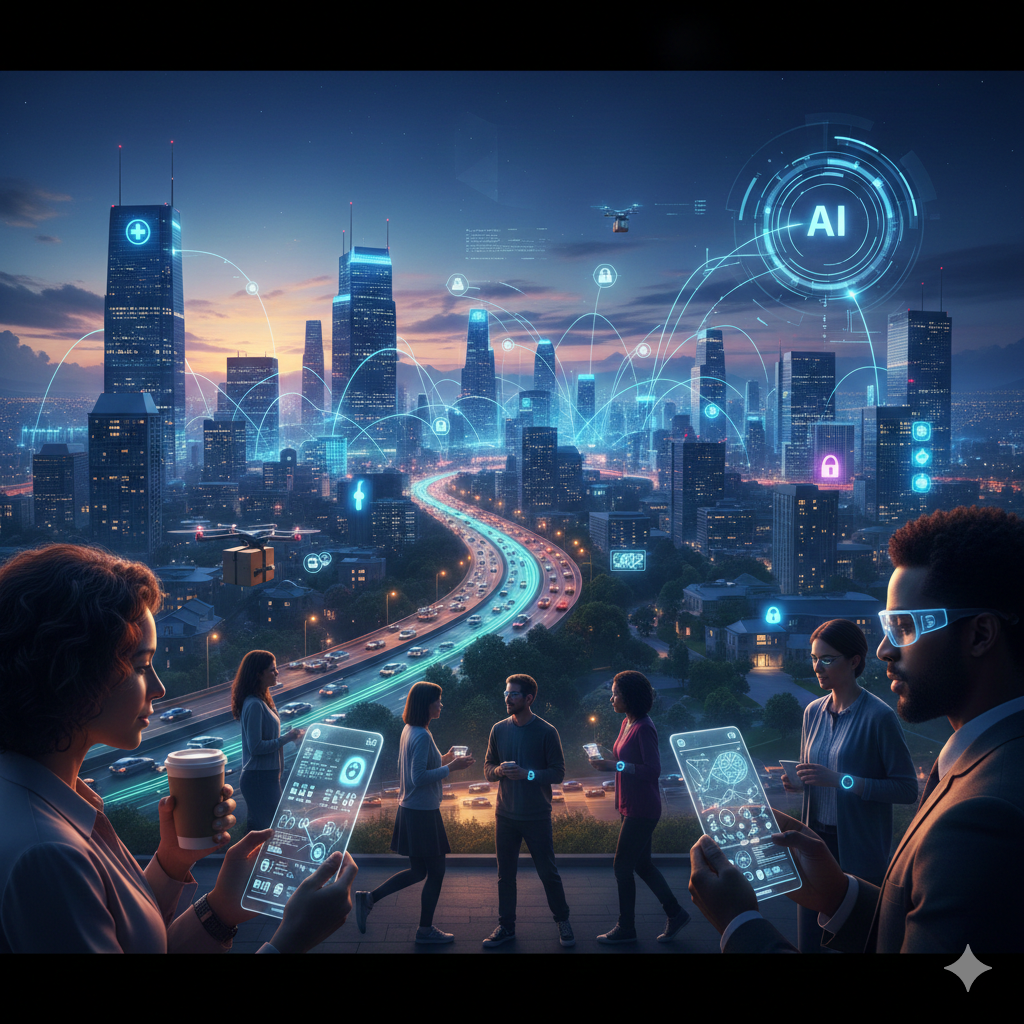
Table: Key AI Applications and Their Direct Daily Impact
| Domain | Key AI Technology | How AI is Already Changing Your Daily Life |
|---|---|---|
| Search | Deep Learning Models (e.g., BERT) | Gives you better, faster, and more relevant answers to complex questions on Google. |
| Finance | Anomaly Detection | Stops fraudulent transactions on your credit card before you even know they happened. |
| Media | Recommender Systems | Fills your Netflix queue and Spotify playlists with content you genuinely love. |
| Health | Computer Vision | Helps doctors detect early signs of serious diseases in medical scans. |
| Security | AI Vision | Distinguishes between a burglar and a cat on your home security camera. |
| Commute | Real-time Data Analysis | Guides |
External Resources for Further Learning 🌐
For those interested in exploring the technology underpinning these transformations, here are some reliable sources:
- OpenAI Research: https://openai.com/research – Insights into the models driving modern language and image generation.
- The AI Ethics & Governance Initiative: https://www.brookings.edu/topic/artificial-intelligence/ – Discussing the policy and safety concerns around AI.
- DeepMind Publications: https://deepmind.com/publications – For breakthroughs in foundational AI research and real-world applications (like health).
FAQ: Common Questions on AI’s Daily Role ❓
Q1: How can I tell if a device is using AI?
A1: Generally, if a device or service “learns” your preferences, makes personalized recommendations, or performs complex tasks like translation, face recognition, or dynamic pathfinding, it is utilizing AI or Machine Learning. Anything that improves over time based on data input is AI-driven.
Q2: What is the difference between AI and Machine Learning (ML)?
A2: AI is the broad goal: creating intelligent machines. ML is a specific method within AI: teaching computers to learn from data without being explicitly programmed. ML is the primary technique behind most of the 101 ways AI is already changing your daily life.
Q3: How does AI benefit my privacy and security?
A3: While AI involves data processing (which raises privacy concerns), it is also the primary tool protecting you. AI is essential for bank fraud detection, spam filtering, and identifying network security threats, acting as your digital defense.
Q4: Will I eventually have to interact with AI for everything?
A4: Not necessarily. Much of AI is designed to be invisible—optimizing systems in the background (like traffic flow or energy grids). The primary visible interactions are focused on convenience, such as voice assistants and personalized apps.
Q5: Is AI responsible for making product prices fluctuate online?
A5: Yes. Dynamic pricing, which allows retailers and travel sites to adjust prices instantly based on current demand, inventory, and competitor actions, is managed entirely by AI algorithms. This is one of the most direct ways AI is already changing your daily life financially.
Q6: I’m not a tech expert. Does AI still impact me significantly?
A6: Absolutely! Whether you use a smartphone or not, AI still affects you through personalized medical care, optimized transportation, secure banking systems, and efficient global supply chains. The transformation of systems by AI touches every single person.
Q7: Is AI the reason my phone battery seems to last longer now?
A7: In part, yes. Smartphone operating systems use AI to learn which apps you use and when, intelligently managing background processes and optimizing power consumption based on your predicted behavior. This is a subtle example of how AI is already changing your daily life for the better.
Q8: What is the most significant, non-obvious way AI is already changing your daily life?
A8: The optimization of logistics and supply chains (items 49 and 83). AI ensures your local grocery store is stocked, your online order arrives on time, and goods travel across the globe with maximum efficiency—a massive, invisible benefit.
Q9: Where can I learn more about how AI is already changing your daily life in my specific job industry?
A9: Look for industry-specific reports from consulting firms (like McKinsey or Gartner) or academic journals focused on AI’s application in your field (e.g., “AI in Marketing,” “AI in Civil Engineering”).
Q10: Is the phrase “AI is already changing your daily life” overused?
A10: While the concept is widely discussed, the sheer scope and breadth (as shown by the 101 ways AI is already changing your daily life list) means the phrase accurately reflects the technology’s universal and ongoing impact.
Pingback: Top 25 IoT Devices Transforming Daily Life
Pingback: Types of AI Explained Simply: ANI, AGI & ASI