
Artificial Intelligence
Artificial Intelligence has quietly become the invisible engine powering modern life. Whether you unlock your phone, browse YouTube, make a UPI payment, or chat with AI tools, you experience AI every day — often without realizing it.
This guide explains What Is Artificial Intelligence in simple language, backed with visuals, examples, and practical insights.
Table of Contents
⭐ What Is Artificial Intelligence? (Simple Definition)
Artificial Intelligence (AI) refers to systems that can think, learn, decide, and solve problems—similar to humans, but at far greater speed and scale. AI can:
- Understand text and speech
- Recognize images
- Learn from patterns
- Predict future outcomes
- Automate repetitive tasks
- Assist in decision-making
Whenever you hear someone ask What Is Artificial Intelligence, the simplest explanation is:
👉 AI is a machine’s ability to act intelligently.
🔍 Why Understanding AI Matters Today
We live in a world where:
- Apps know what we want to watch
- Maps find the fastest route
- Phones understand our voice
- Governments use AI for digital services
- Businesses automate work with AI tools
This means AI is no longer optional knowledge — it’s essential.
📱 Where You Already Use AI Every Day
| Daily Tool Feature | How AI Works There |
| Face Unlock | Matches your facial pattern |
| Google Search | Understands queries & intent |
| YouTube Recommendations | Learns from your watch history |
| Instagram Explore | Identifies your interests |
| UPI Fraud Detection | Flags abnormal transactions |
| ChatGPT & Chatbots | Understand language & generate replies |
AI is deeply embedded in personal, professional, government, and business systems.
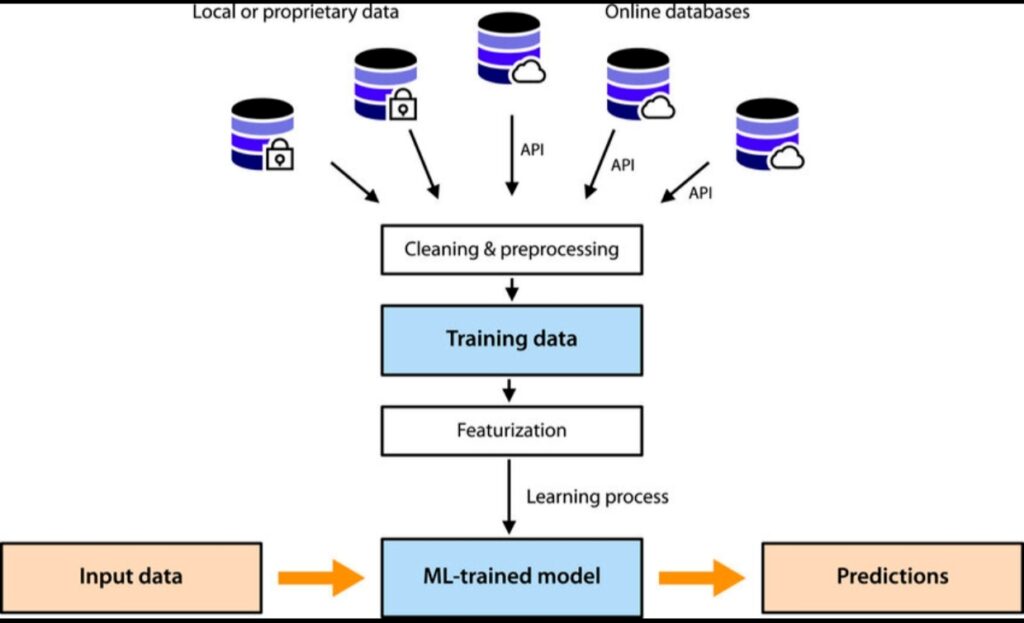
🧠 How Artificial Intelligence Works (Simple Workflow)

Understanding What Is Artificial Intelligence becomes much easier when you visualize how it works.
1️⃣ Step 1: Input Data
AI learns from examples just like humans do.
Example: thousands of images of cats and dogs.
2️⃣ Step 2: Pattern Recognition
AI finds similarities and differences:
- Ear shapes
- Fur patterns
- Eye position
- Body shape
3️⃣ Step 3: Prediction / Decision
Once trained, the AI can say:
✔ “This is a cat.”
✔ “This is a dog.”
✔ “This image contains no animals.”
This process is called Machine Learning, and it’s the core of modern AI.
📈 Growth of AI (Visual Concept Graph)
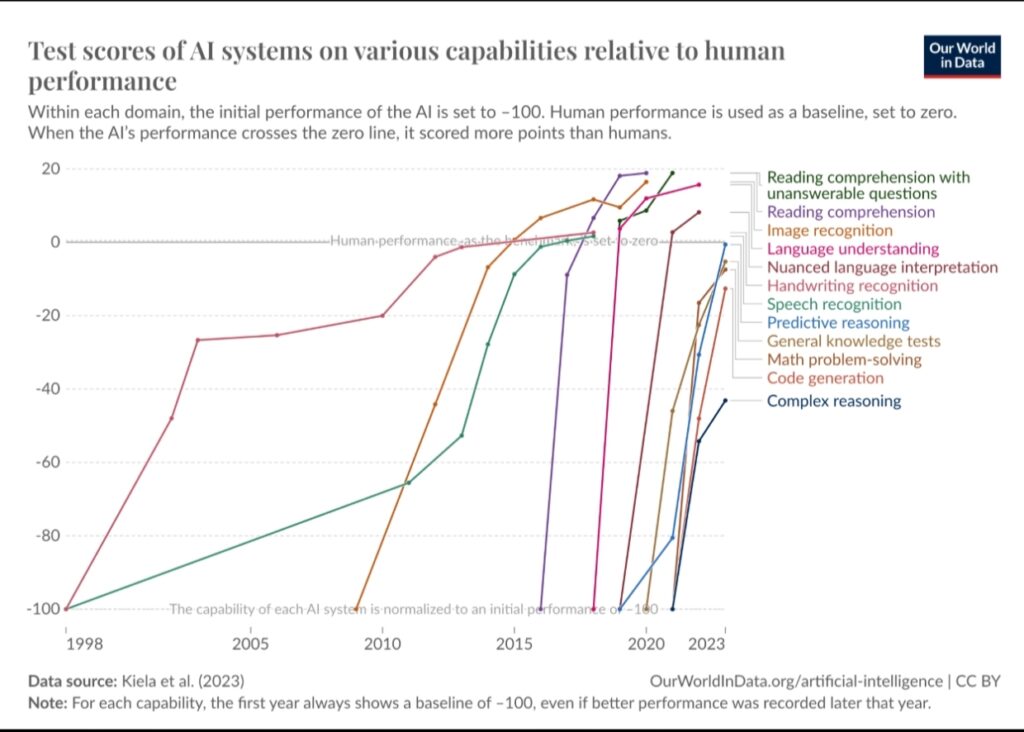
AI usage has grown rapidly in:
- Healthcare
- Finance
- Education
- Government services
- Retail
- Manufacturing
- Personal productivity
As more devices become smart and more data becomes available, AI will continue expanding into every part of daily life.
⚙️ Types of Artificial Intelligence (Basic Classification)
To better understand What Is Artificial Intelligence, you must know its three main types:
| Type | Meaning | Example |
|---|---|---|
| ANI | Artificial Narrow Intelligence | AI that performs a single task Siri, Google Maps |
| AGI | Artificial General Intelligence | Human-level intelligence Still theoretical |
| ASI | Artificial Superintelligence | Beyond human intelligence Future concept |
You will learn these in detail in Tutorial #2
🌐 Real-World Applications of AI
Here’s how AI is transforming the world in the current era:
🧬 Healthcare
- Early disease detection
- AI-powered medical scans
- Robot-assisted surgeries
🏦 Finance
- Fraud prevention
- Automated customer service
- Trading predictions
📚 Education
- Personalized learning apps
- Smart assessments
- AI tutors
🏢 Businesses
- Automation tools
- Inventory forecasting
- Customer behavior analysis
🛠 Government Services
- Digital form automation
- Smart public safety systems
- AI support for govt schemes
🎨 AI Visual Recognition Example

This is one of the most advanced and useful abilities of modern AI — detecting and identifying objects, faces, and scenes.
📚 AI vs Human Intelligence
| Feature | Humans | AI |
|---|---|---|
| Speed | Slower | Extremely fast |
| Memory | Limited | Almost unlimited |
| Learning | Based on experience | Based on data |
| Emotion | Present | None |
| Consistency | Varies 100% | consistent |
AI doesn’t replace humans — it supports and enhances human capabilities.
💡 Benefits of Artificial Intelligence
People searching for What Is Artificial Intelligence often want to know: “Why is AI useful?”
Here are the strongest benefits:
- Saves time
- Reduces effort
- Automates repetitive work
- Improves accuracy
- Helps in studies & work
- Makes better decisions
- Enhances productivity
AI is your smartest digital assistant, always available, always learning.
🚀 Future of AI — What’s Coming Next
We are entering a time where AI will:
- Handle more office work
- Improve healthcare diagnostics
- Personalize learning for every student
- Enhance cybersecurity
- Drive autonomous vehicles
- Boost automation across industries
The future belongs to those who know how to use AI.
🔗 Learn Next Topics:
AI Tutorial #2: Types of AI — ANI, AGI & ASI Explained
AI Tutorial #3: Machine Learning Basics
AI Tutorial #4: What Are Neural Networks?
AI Tutorial #6: What Is an LLM?
Discover more: Artificial Intelligence
🌍 Helpful Resources
Google AI – https://ai.google
IBM AI Learning – https://www.ibm.com/artificial-intelligence
MIT AI Explained – https://mit.edu/ai
🎯 Conclusion
You now understand What Is Artificial Intelligence — how it works, where it’s used, and why it matters in the modern digital world.
Pingback: 3 Powerful Types of AI: ANI, AGI & ASI for Beginners
Pingback: Ultimate Machine Learning Basics for Beginners
Pingback: Large Language Model Agentic Workflow: Master the Revolutionary AI Future#5