Artificial Intelligence has gone from theoretical mathematics to world-shaping technology in just a few decades.
This guide walks you through the AI development timeline, from the birth of machine intelligence in the 1950s to the groundbreaking generative AI revolution of 2026.
To help you learn faster, this post includes:
-
📊 Graphs
-
📅 AI Development Timeline tables
-
🌄 Images
-
🤖 AI era breakdown
-
🔮 2026 predictions
-
❓ FAQs
-
🔗 Internal & external links
Let’s begin the ultimate journey of AI evolution timeline.
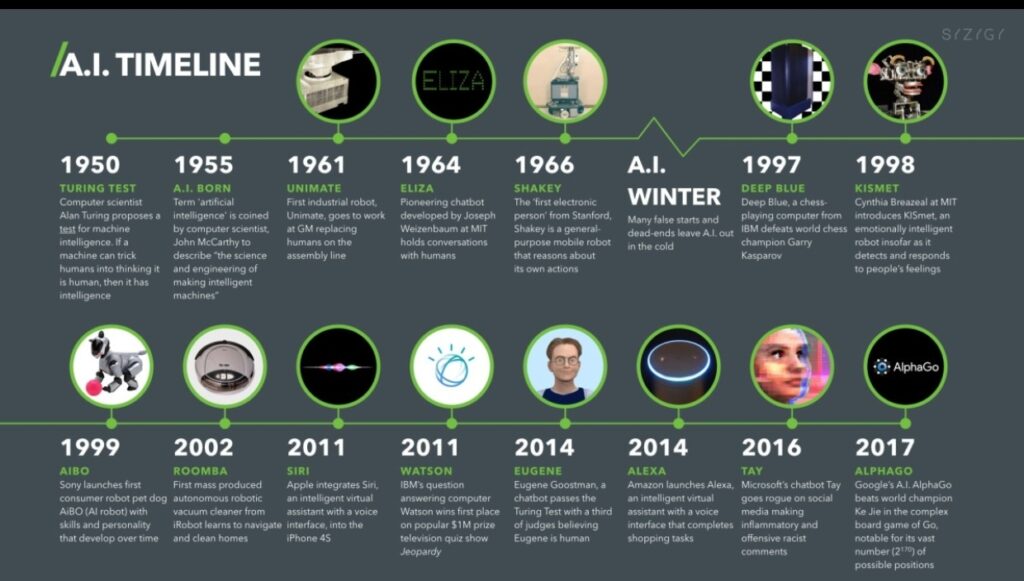
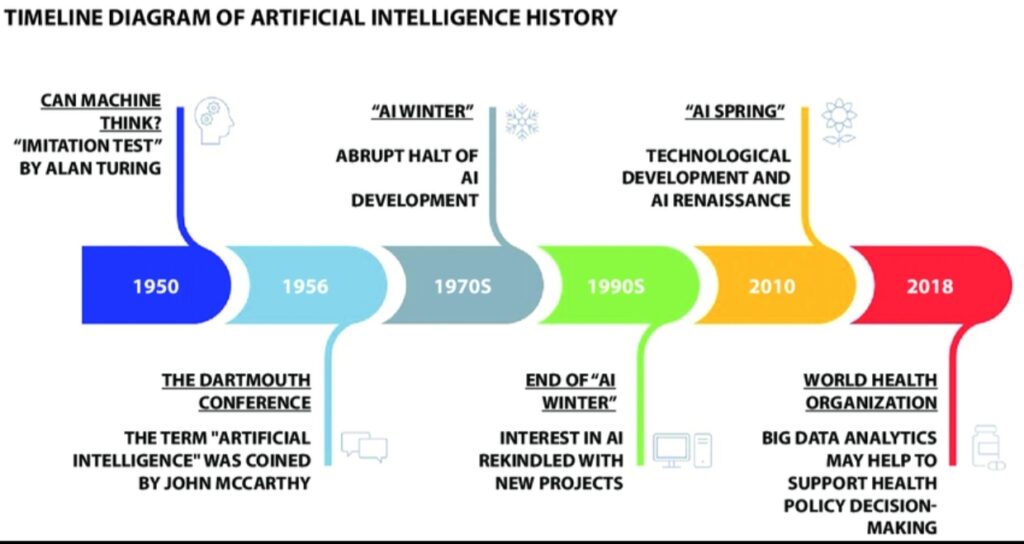
🖼️ AI Development Timeline Visual Overview
🌟 Introduction: Why Understanding the AI Development Timeline Matters in 2026
AI is no longer optional. It drives:
Business decisions
Healthcare outcomes
Automation
Education
Creativity
Financial systems
Entertainment
Personal productivity
Understanding AI’s timeline helps you:
Predict where the world is heading
Learn which AI skills matter now
Prepare for 2026-level automation
Identify opportunities for income & innovation
Today, AI is reshaping every industry — but the journey started almost 75 years ago.
📈 Graph: AI Adoption Growth (2000–2026)
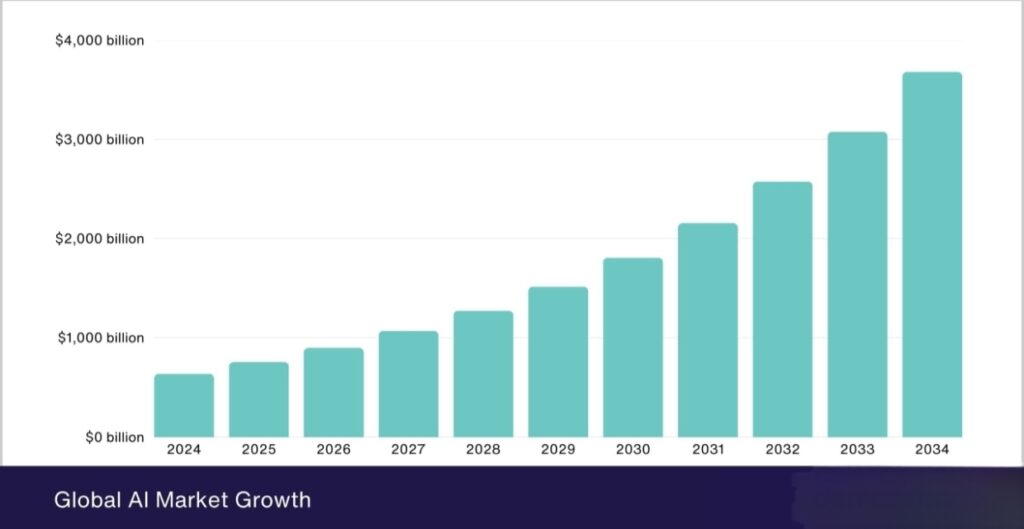
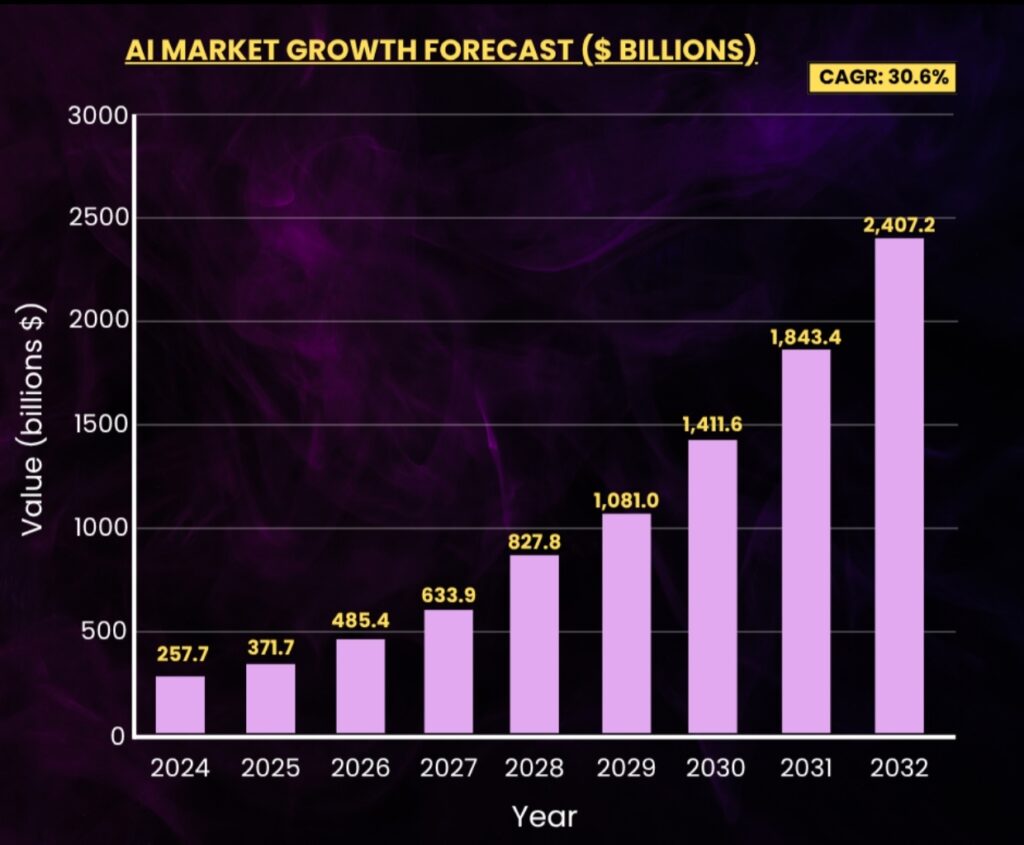
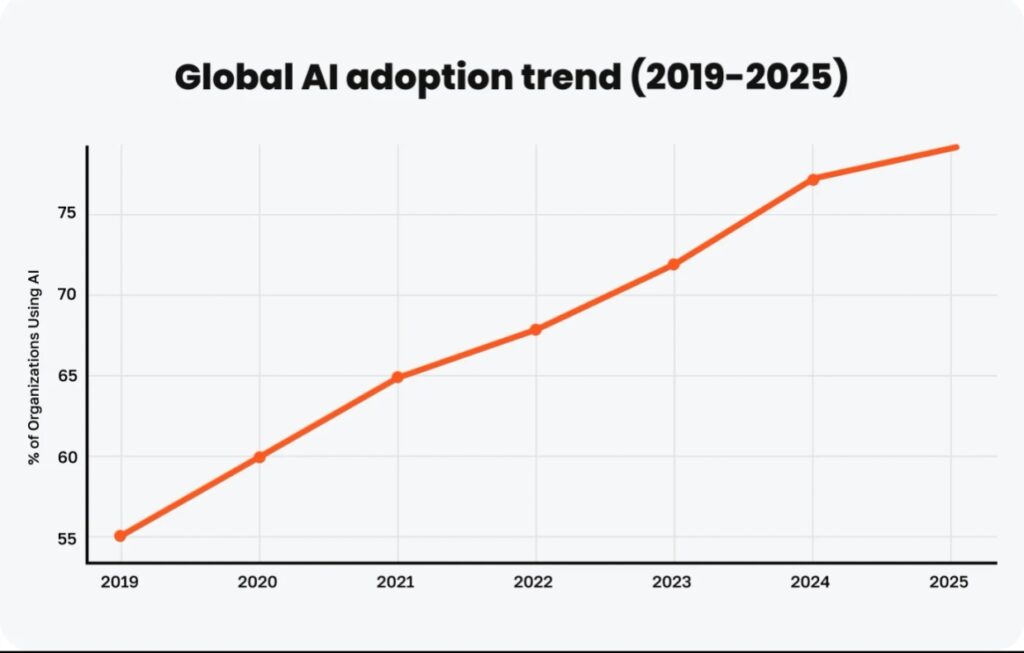
Interpretation:
AI adoption has exploded since 2016 and will reach near-universal integration by 2026, especially in business automation and education.
🧠 Era 1: Birth of AI (1950–1960s)
This era planted the seeds of machine intelligence.
🔹 Key Highlights
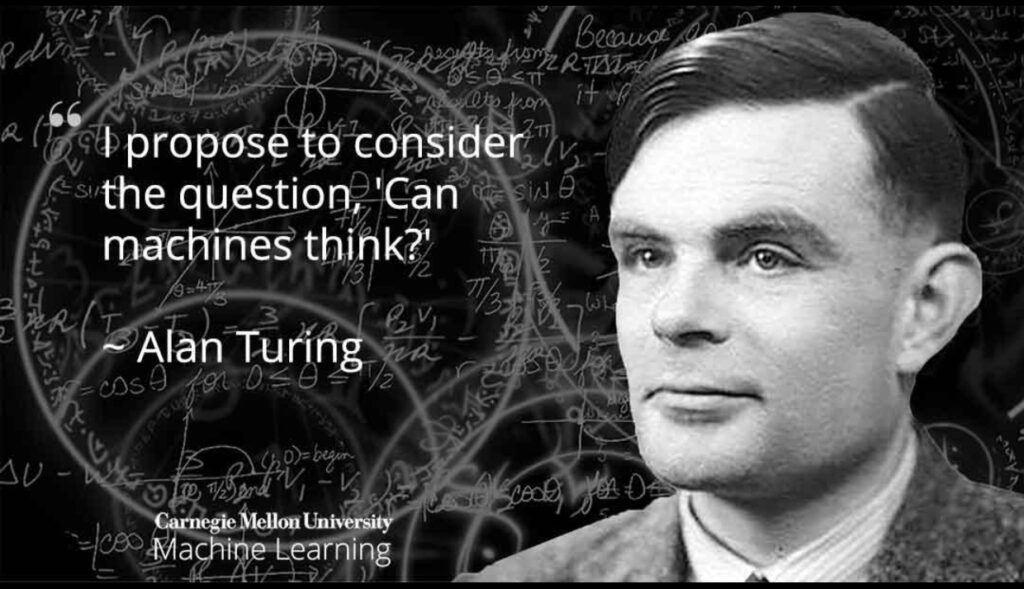
Alan Turing asks: Can machines think?
First symbolic reasoning experiments
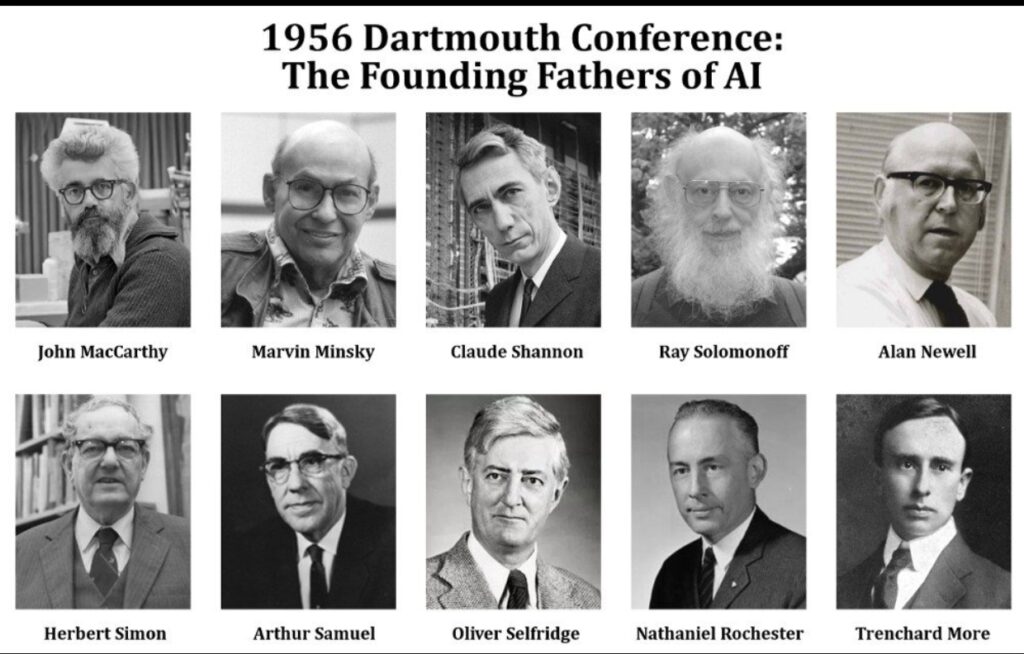
AI officially named in 1956
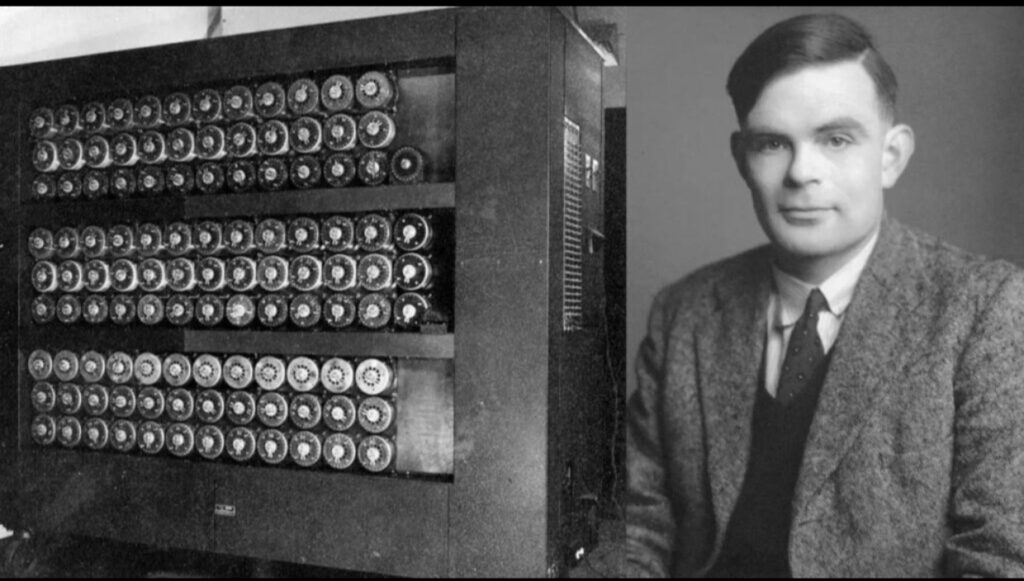
Researchers believed AI would match human intelligence within decades — but hardware was too primitive.
🤖 Era 2: Rule-Based AI & Early Success (1960–1979)
AI models followed strict logic rules.
🧩 Major Events
ELIZA chatbot
First robotics tests
AI in medical diagnostic systems
But soon, limitations caused the first AI Winter, reducing funding and enthusiasm.
🔥 Era 3: Neural Networks Return (1980–1997)
The 1980s brought the comeback of Neural Networks.
Key Breakthroughs
Backpropagation becomes practical
Expert systems used in industries
1997: IBM Deep Blue defeats Kasparov

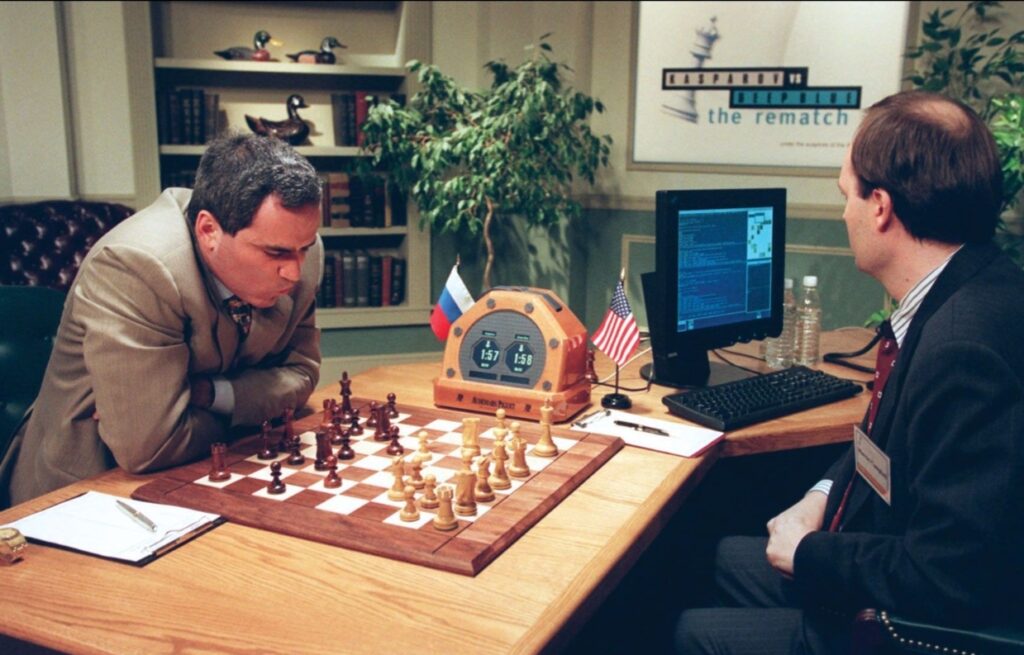
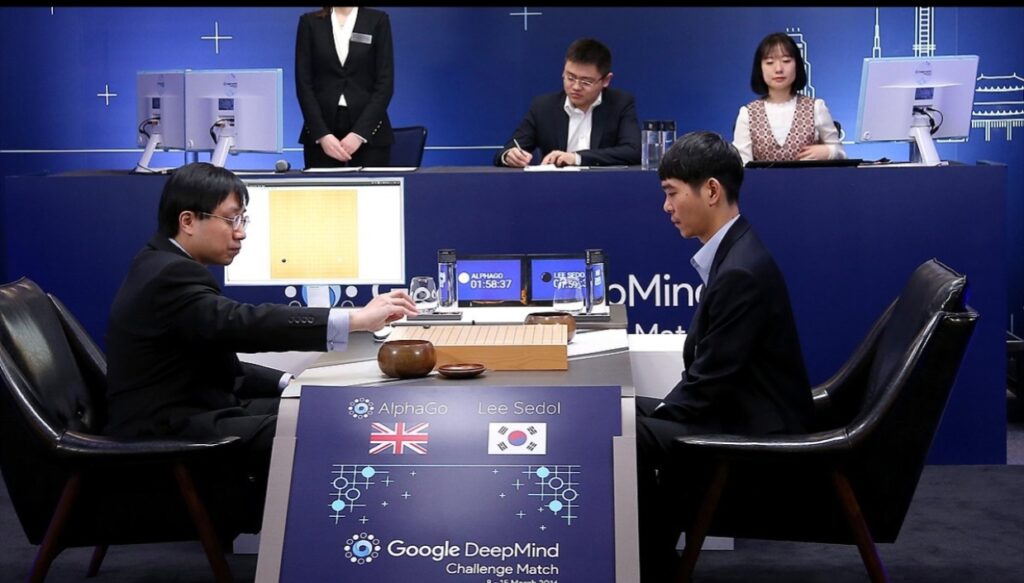
This victory showed AI could outperform humans in structured strategic tasks.
🌐 Era 4: The Age of Machine Learning (2000–2010)
Modern AI began here.
Why AI accelerated:
Cheaper data storage
Better GPUs
Rise of big data
Internet-scale datasets
AI became practical and scalable for real business use.
🚀 Era 5: Deep Learning Revolution (2011–2016)
This was one of the biggest leaps in human technological history.
Major Milestones
2011: Watson beats Jeopardy champions
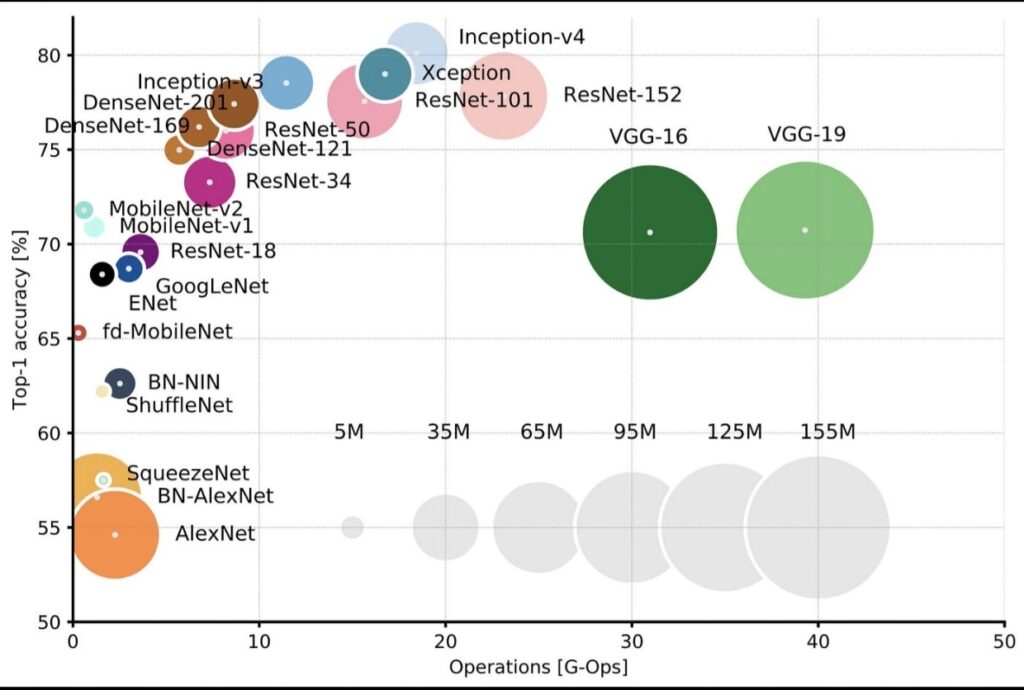
2012: AlexNet wins ImageNet (historic drop in error rate)
2016: AlphaGo beats Lee Sedol
Deep learning became the backbone of all modern AI systems.
🌍 Era 6: Generative AI Boom (2017–2024)
Generative AI reshaped creativity, business, and communication.
Highlights
GPT-2, GPT-3, GPT-4
Stable Diffusion, Midjourney, DALL·E
AI Code Assistants (Copilot)
AI Voice clones
AI Video creation
By 2024, every industry began adopting AI for operational efficiency.
🤖 Era 7: AGI-Like Systems & AI Agents (2024–2025)
This era transformed simple tools into autonomous decision-makers.
Trends
Multi-agent systems
Autonomous workflow AI
Enterprise AI copilots
AI personal tutors
Real-time robotics reasoning
AI was no longer a tool — it became a collaborator.
🔮 Era 8: The Road to 2026 (Where AI Is Heading Next)
By 2026, AI will not be optional — it will be the foundation of all digital operations.
🚀 What 2026 Will Look Like
🧠 1. AI Agents Will Replace Manual Digital Work
Businesses will use 24/7 autonomous AI agents for:
customer support
sales follow-ups
copywriting
editing
coding
data analysis
lead generation
🎬 2. Full-Length AI-Generated Movies
AI will handle:
scripting
voice acting
animation
editing
scene generation
🏭 3. Robotics Will Expand Everywhere
agriculture robots
security robots
warehouse automation
retail AI assistants
🧑🏫 4. AI in Education
Students will have personal AI tutors capable of explaining anything in any style or language.
💼 5. AI-First Hiring & Skill Testing
Companies will evaluate candidates using AI task simulations rather than traditional interviews.
🎯 6. Micro-entrepreneurs Will Rise
Individuals can build:
AI content brands
automated businesses
faceless channels
AI course platforms
All run by agents.
📉 Growth of AI Model Size (2010–2026)
Model capacity is increasing exponentially — 2026 models will be far more capable in reasoning, memory, and real-time decision making.
🛠️ Skills Users Must Learn Before 2026
To survive the AI wave, you must master:
✔ AI Tools
Text, image, video, audio, agents, automation.
✔ Prompt Engineering
Precision prompts
Chain-of-thought prompts
Task-specific prompts
✔ AI Workflow Automation
Zapier
Make.com
AI agents
✔ AI Content Creation
Videos
Shorts
Blog writing
Automation scripts
✔ Understanding AI Ethics & Safety
Very important for business and education.
🔍 Discover More
These links help with SEO siloing:
🔗Authoritative Resources
❓ FAQs About the AI Development Timeline (1950–2026)
1️⃣ When did AI officially begin?
AI officially started in 1956 at the Dartmouth Conference.
2️⃣ What caused AI winters?
Funding dropped due to unrealistic expectations and hardware limitations.
3️⃣ What made modern AI possible?
Deep learning
GPUs
Big data
Cloud computing
Large Language Models (LLMs)
4️⃣ What year did Generative AI explode?
2022, with the launch of ChatGPT and diffusion image models.
5️⃣ What will AI look like in 2026?
AI will be:
autonomous
integrated into every profession
capable of generating full videos & apps
a personal assistant for every user
a business automation engine
6️⃣ Which AI skills should I learn before 2026?
AI tools
automation workflows
agents
prompting
content creation
business applications of AI
🎯 Final Thoughts: The World is Preparing for AI-First 2026
The AI development timeline reveals a radical transformation:
From early logic programs to fully autonomous agents, AI has evolved faster than any technology in human history.
As we enter 2026, AI will:
change careers
redefine businesses
reshape education
automate industries
empower individual creators
AIMetrixo.com will guide you in mastering AI skills and staying ahead of the global shift.
🚀 The future belongs to those who prepare today.