⭐ Introduction: Why Understanding Machine Learning Matters
Welcome back to the AIMetrixo AI Learning Series!
In this third tutorial, we dive deep into Machine Learning (ML) — the core technology behind AI systems used in:
- 📱 Smartphones
- 🚗 Self-driving cars
- 🏦 Fraud detection
- 🎥 Recommendation platforms
- 🤖 Chatbots and automation systems
Understanding how machines learn helps you:
- Build your own AI projects
- Launch automated workflows
- Create smarter content systems
- Improve decision-making and predictive accuracy
- Stay ahead of the technology curve
This tutorial is written for beginners, and uses examples anyone can understand.
Table of Contents
🧠What Is Machine Learning? (Machine Learning Basics for Beginners: How Machines Learn and Make Smart Decisions)
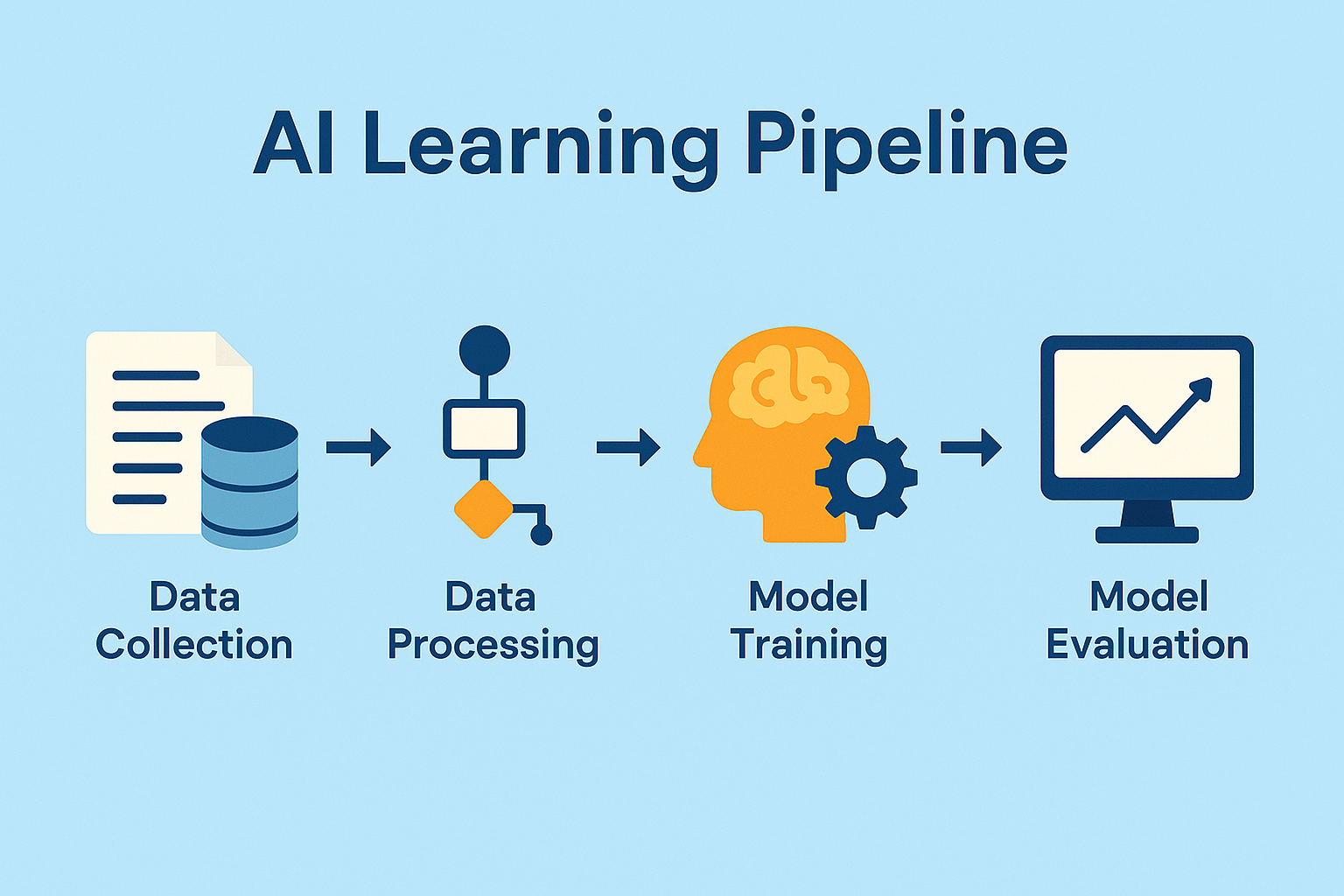
Machine Learning is a branch of AI where computers learn from data instead of being manually programmed.
Traditional programming:
➡️ A developer writes explicit rules.
Machine Learning:
➡️ The system learns patterns from data and makes decisions.
✔ Real-world examples
- YouTube recommendations: ML analyzes what you watch and predicts what you’ll like next.
- Spam filters: ML learns from millions of emails to identify new spam patterns.
- Bank fraud detection: ML flags suspicious transactions based on behavior patterns.
In one sentence:
💡 Machine Learning = Data + Patterns + Predictions
⚙️ How Machines Learn (Step-by-Step Process)
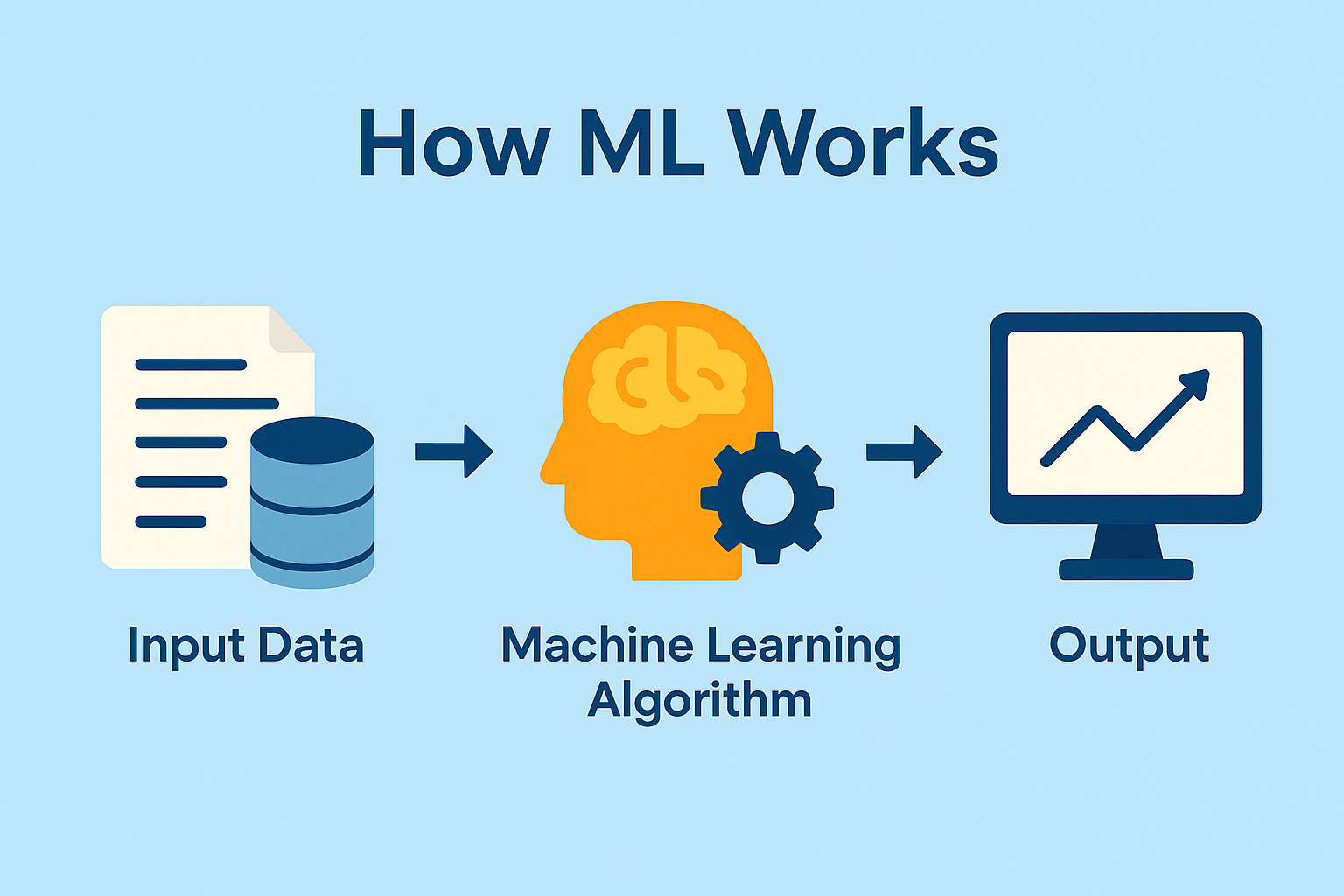
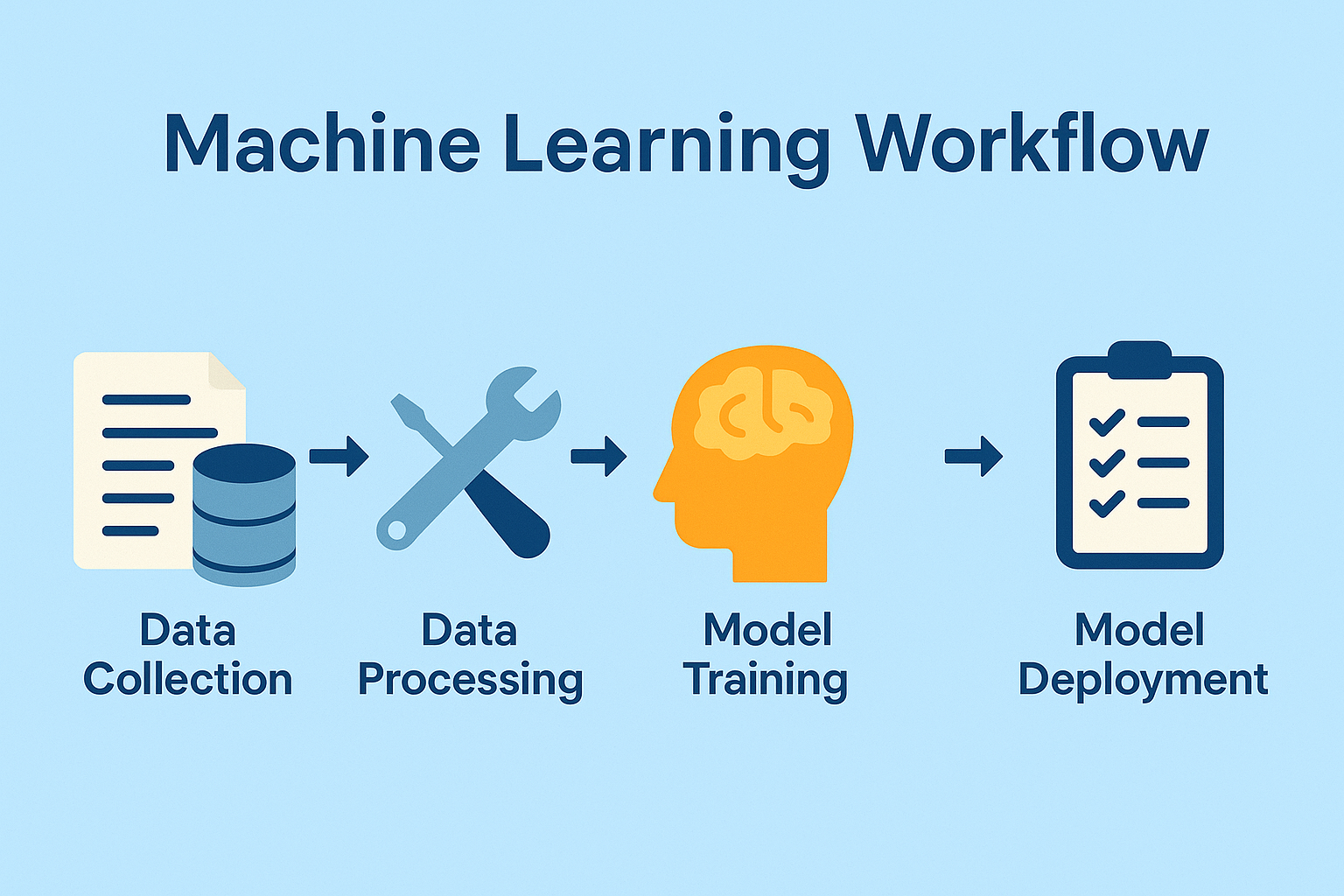
Machine learning follows a predictable pipeline:
1️⃣ Collect Data
The machine needs examples.
E.g., For detecting cats in images, you need thousands of labeled “cat” and “not cat” images.
2️⃣ Prepare & Clean Data
Remove errors, fix missing values, normalize numbers, convert text into numerical form, etc.
3️⃣ Choose a Model
The model is like the brain of the system.
Examples of ML models:
- Decision Trees
- Linear Regression
- K-Nearest Neighbors
- Neural Networks
4️⃣ Train the Model
The system studies patterns in the data.
5️⃣ Test / Validate
You check how well the model performs on unseen data.
6️⃣ Deploy
The model is integrated into an app or system.
7️⃣ Optimize Over Time
Models improve continuously using new data.
🧩 Types of Machine Learning
There are three main types of ML. Below is a simple explanation and examples.
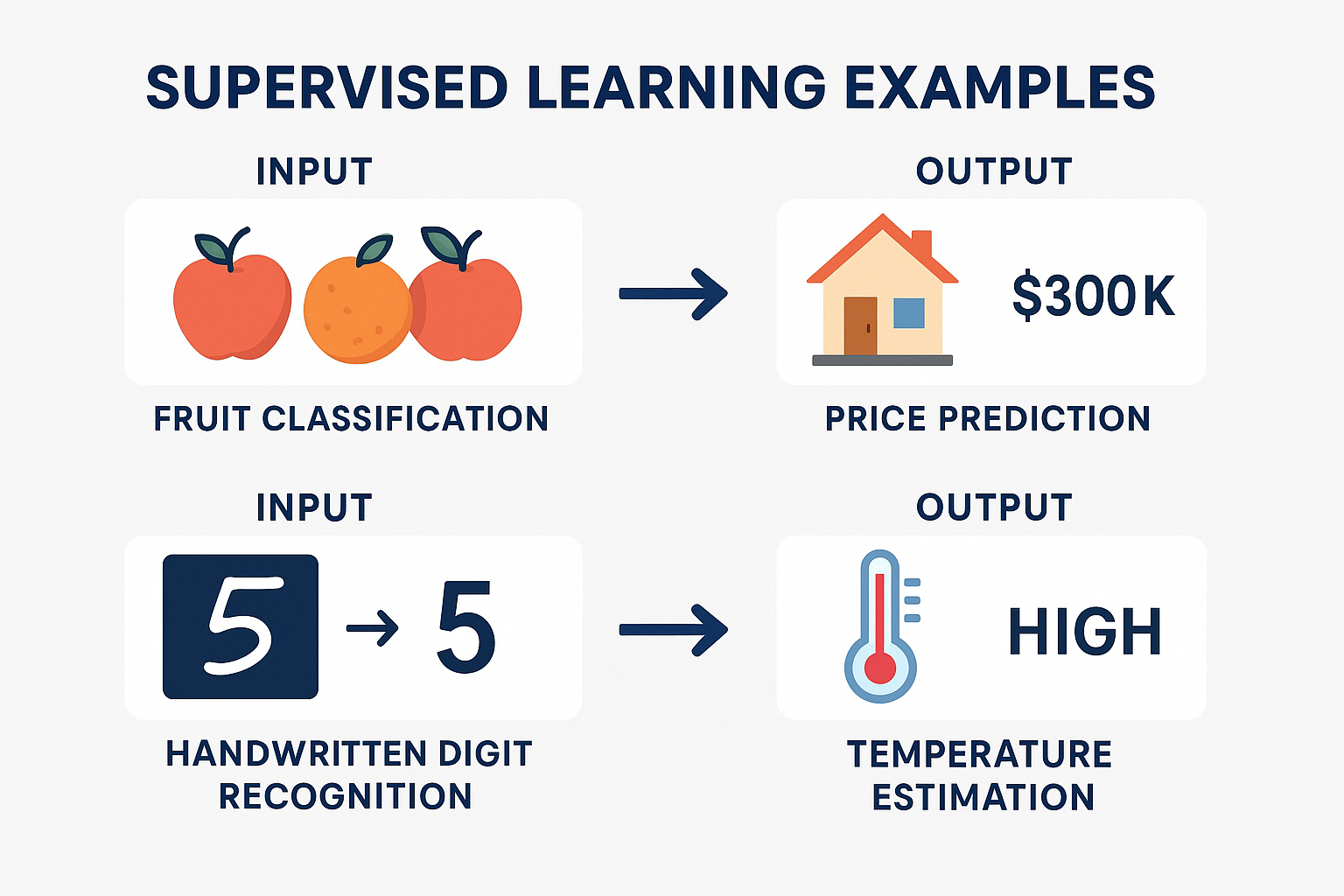
🟦 1. Supervised Learning (Most Common)
The machine learns using labeled examples — data that already has the right answers.
✔ Examples:
- Predicting house prices
- Classifying emails as spam/not spam
- Recognizing handwritten numbers
- Predicting stock trends
How it works:
- Input: Data + Labels
- Output: Learns to map input → output
Use cases:
| Industry | ML Use |
|---|---|
| Finance | Fraud detection |
| Healthcare | Disease diagnosis from scans |
| Retail | Demand forecasting |
| Entertainment | Movie recommendations |
🟩 2. Unsupervised Learning (Finding Hidden Patterns)
The machine learns without labeled data.
It tries to find similarities, clusters, or natural patterns.
✔ Examples:
- Customer segmentation
- Grouping similar news articles
- Identifying unusual patterns (anomalies)
- Market segmentation in e-commerce
How it works:
- No labels
- The system organizes the data automatically
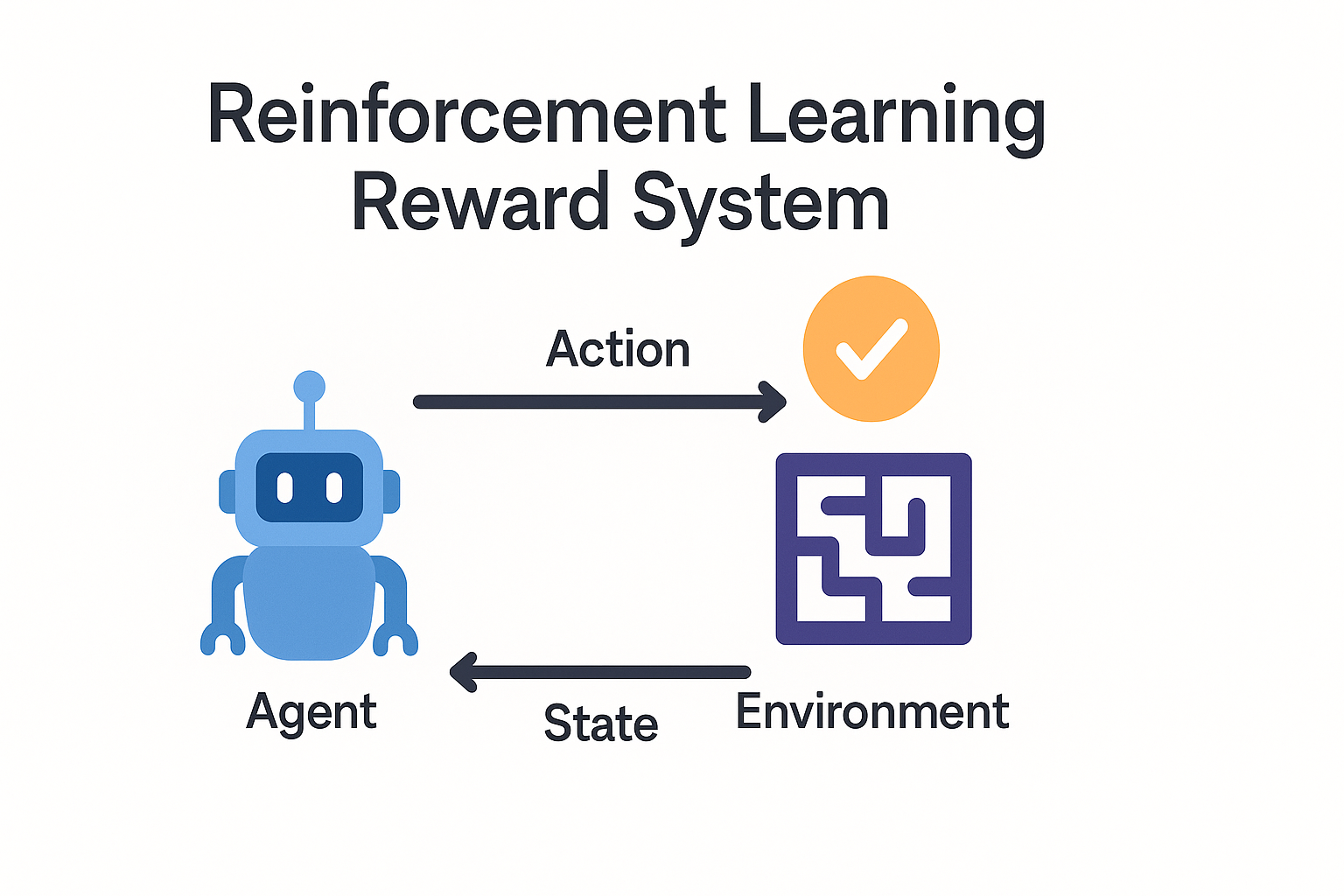
🟨 3. Reinforcement Learning (Learning Through Rewards)
This type of ML helps machines learn by trial and error, similar to training a pet.
✔ Examples:
- Training robots to walk
- AI playing chess or video games
- Autonomous cars learning driving behavior
- Recommendation systems adjusting based on engagement
How it works:
- The model performs an action
- Receives reward or penalty
- Learns to maximize rewards
🚀 Real-World Applications of Machine Learning
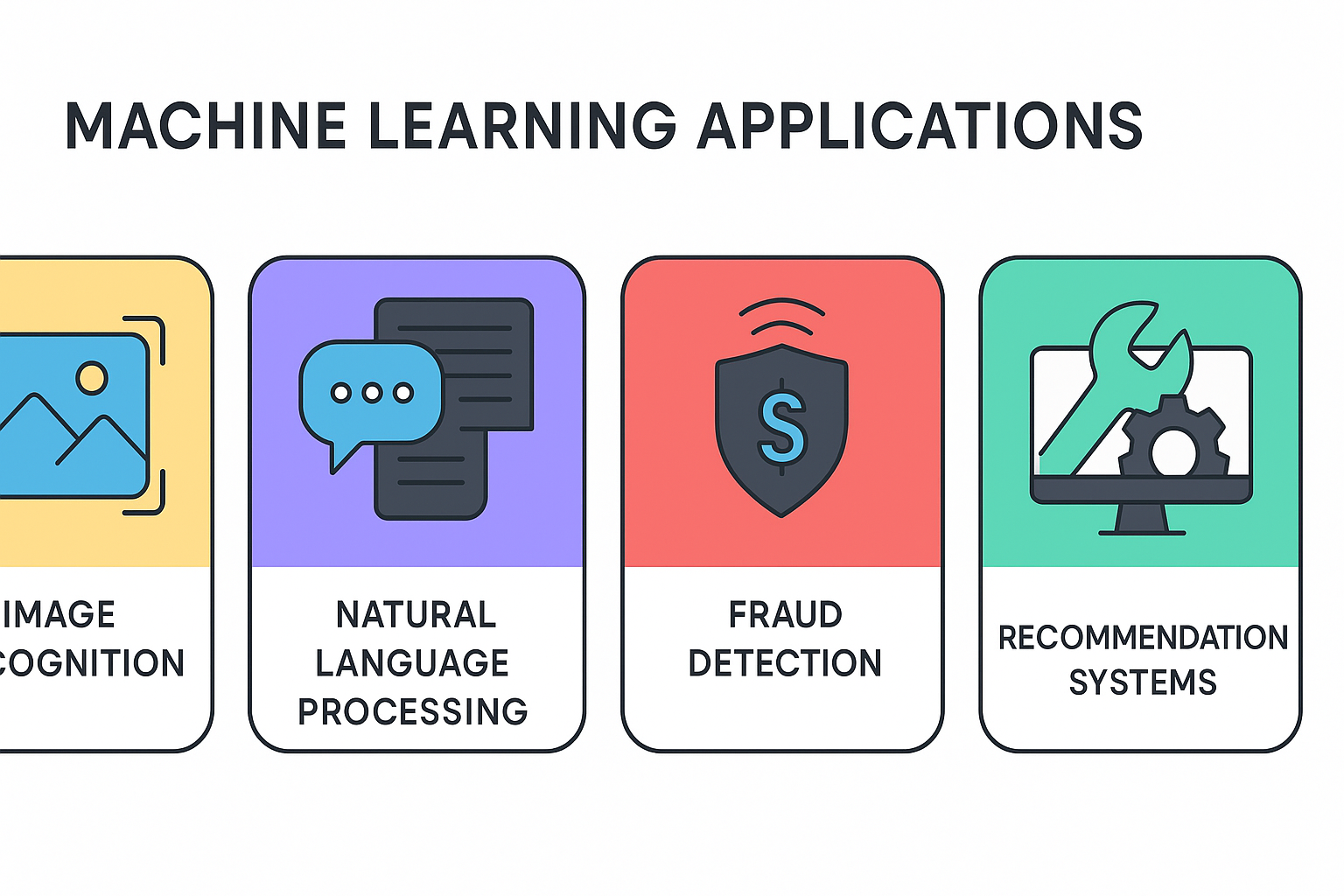
Machine Learning is everywhere. Below are strong examples you can use in your articles, social media, or tutorials.
🎬 1. Netflix Recommendations
ML studies what you watch, how long you watch, and what similar users prefer.
➡️ Result: Personalized movie suggestions.
🛒 2. Amazon Product Recommendations
Amazon uses ML to predict what you may want to buy next based on:
- Browsing history
- Purchase behavior
- Similar user behavior
🚖 3. Uber Surge Pricing
ML models detect demand and adjust pricing automatically.
🏦 4. Banking Fraud Alerts
When an unusual transaction occurs, ML compares it against millions of normal transactions and raises an alert.
🏥 5. Medical Diagnosis
Models analyze X-rays, MRIs, blood samples, etc., to assist doctors.
🤖 6. Chatbots & Virtual Assistants
Machine Learning enables smart responses and personalized interaction.
📘 Common Machine Learning Algorithms (Beginner Friendly)
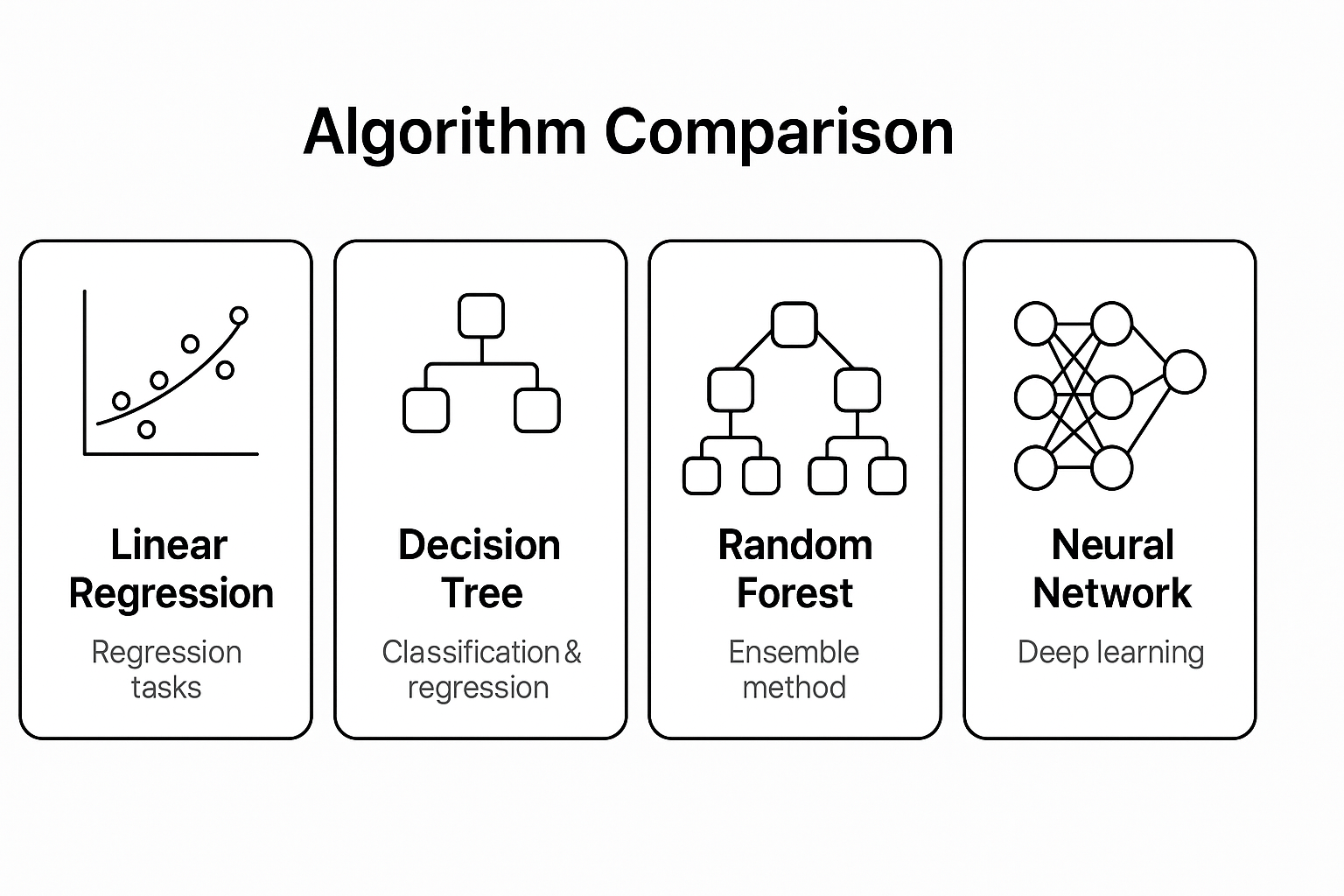
Here are the most popular algorithms with simple explanations.
| Algorithm | Type | Purpose | Example |
|---|---|---|---|
| Linear Regression | Supervised | Predict numbers | Predict house prices |
| Logistic Regression | Supervised | Yes/No decisions | Spam detection |
| Decision Trees | Supervised | Classification | Loan approval |
| K-Means | Unsupervised | Clustering | Customer segmentation |
| Random Forest | Supervised | Predictions | Fraud detection |
| Neural Networks | All types | Complex patterns | Image recognition |
🔍 Challenges in Machine Learning
Understanding challenges helps you avoid mistakes.
⚠️ 1. Bad or Insufficient Data
Poor data → poor results.
⚠️ 2. Overfitting
Model memorizes data instead of learning patterns.
⚠️ 3. Underfitting
Model is too simple.
⚠️ 4. Bias in Data
Causes unfair predictions.
⚠️ 5. High Computational Load
Some models need powerful GPUs.

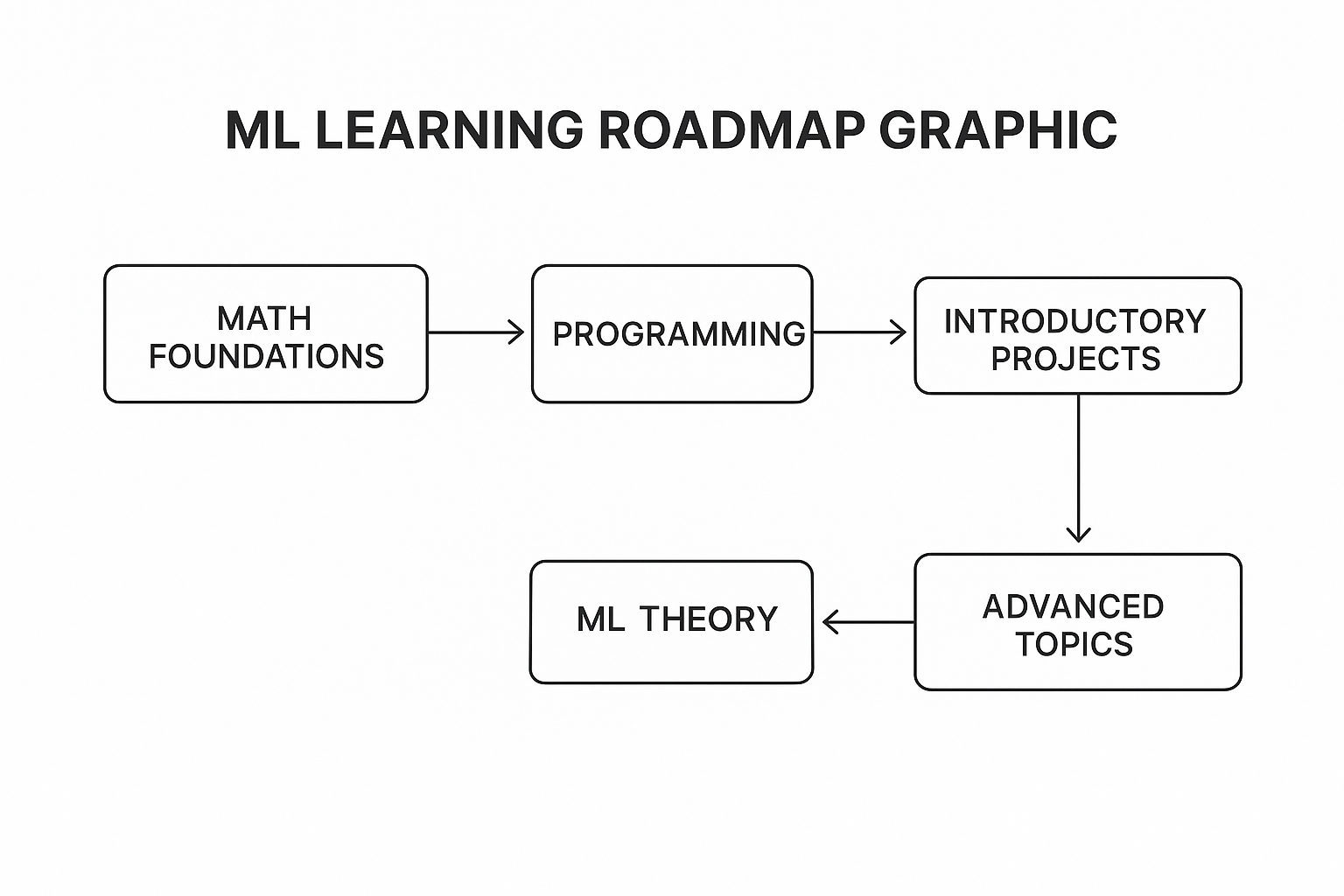
🧭 How to Start Learning ML (Roadmap for Beginners)
Here is a clear, beginner-friendly learning path:
⭐ Step 1: Learn Python Basics
Python is the easiest language for ML.
⭐ Step 2: Learn ML Libraries
- NumPy
- Pandas
- Scikit-Learn
- TensorFlow / PyTorch (advanced)
⭐ Step 3: Start With Simple Models
Linear regression, decision trees, clustering.
⭐ Step 4: Build Small Projects
Examples:
- Movie recommendation model
- Spam detector
- Price prediction model
⭐ Step 5: Learn Deployment
Use Flask, FastAPI, or cloud platforms.
🔗 Helpful Internal & External Links
Internal Links (AIMetrixo Tutorials)
- Tutorial 1: Introduction to AI
- Tutorial 2: How AI Creates Content
External Trusted Resources
❓ FAQ Section (SEO Optimized)
1. What is Machine Learning in simple words?
Machine Learning means teaching computers to learn from data instead of following fixed rules.
2. Do I need coding skills to learn ML?
Basic Python helps a lot. Many tools are beginner-friendly.
3. What are the best real-world examples of ML?
Netflix recommendations, Amazon suggestions, fraud detection, and chatbots.
4. Which ML type should beginners start with?
Supervised learning — it’s the simplest and most widely used.
5. How long does it take to learn ML?
With daily practice, 2–3 months is enough for basic projects.
6. Is Machine Learning the same as AI?
ML is a subset of AI focused on learning patterns from data.
🎯 Conclusion: Machine Learning Is the Foundation of Modern AI
Machine Learning is not just a technical concept — it’s the engine powering nearly every modern system.
From your smartphone to banking, entertainment, healthcare, and online shopping, ML shapes the world around us.
By understanding:
- how machines learn
- the types of ML
- real-world applications
- common algorithms
- beginner steps
You now have a strong foundation to move deeper into AI development and automation.